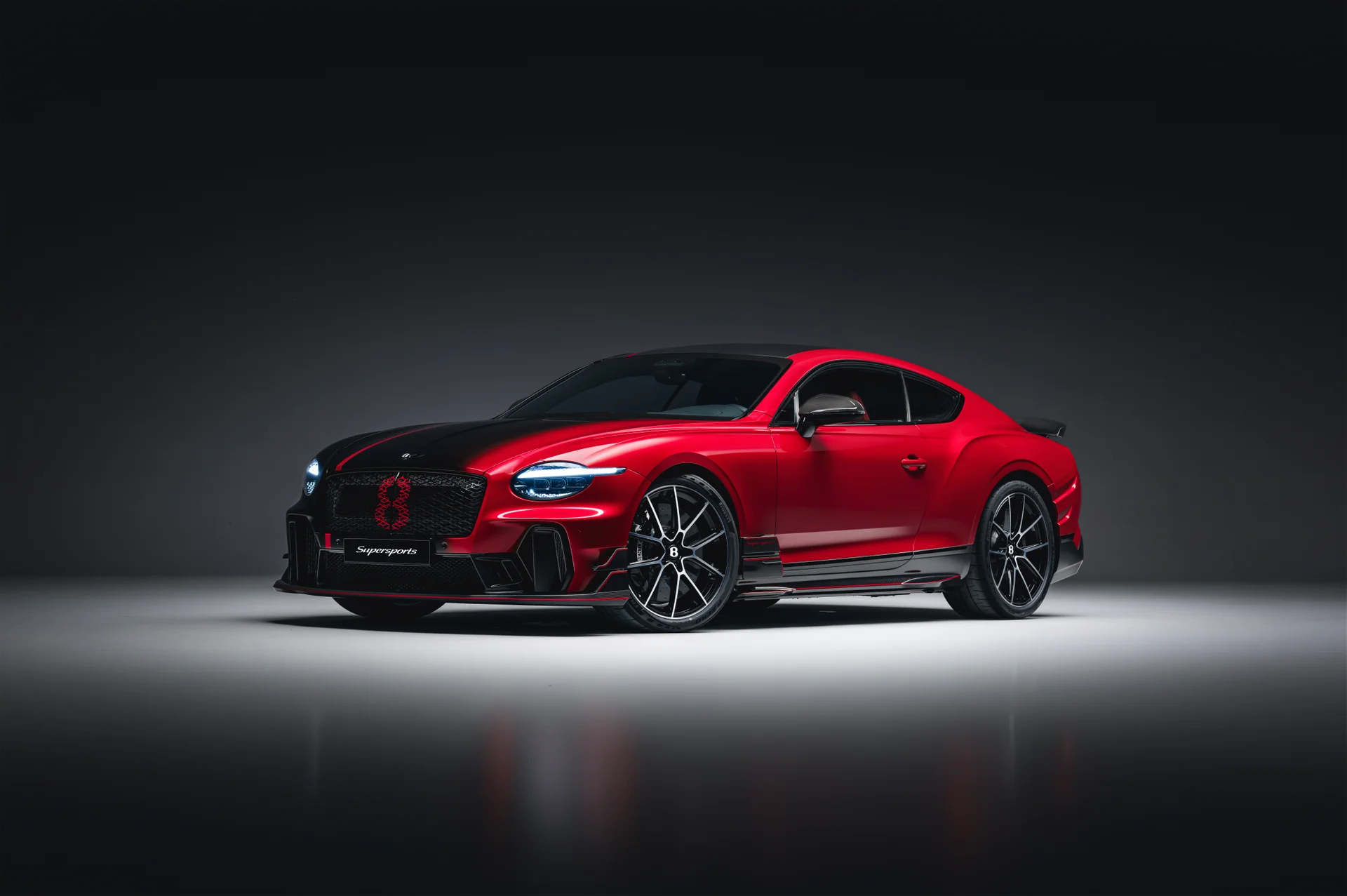
A car can reveal its priorities before its wheels begin to turn. Look at the Supersports from one side, then the other, and the colour changes. Open the door and the distinction continues: a brighter space around the driver, a darker one around the passenger.
This is the idea behind Design Theme by Mulliner, a specification introduced for the Supersports in July 2026. The paintwork makes a proposition visible. One person’s place within the car becomes the starting point for a composition extending across its exterior and cabin.
Understanding that composition means looking beyond the colour. Before Mulliner gave the idea this particular expression, the Supersports development team had already been asking how a familiar grand tourer could acquire a different purpose.
A Familiar Shape, Reconsidered
The Supersports name reaches back to Bentley’s 1925 Super Sports, a development of the 3 Litre with a shorter, lighter chassis and an uprated engine. The historical connection gives the new project a context: changing an established car through deliberate decisions about what it needs to do.
For the present Supersports, Bentley chose rear-wheel drive and a combustion-only V8, departing from the hybrid, all-wheel-drive arrangement of the contemporary Continental GT. The cabin became a two-seat space. These choices set the direction for the design work that followed.
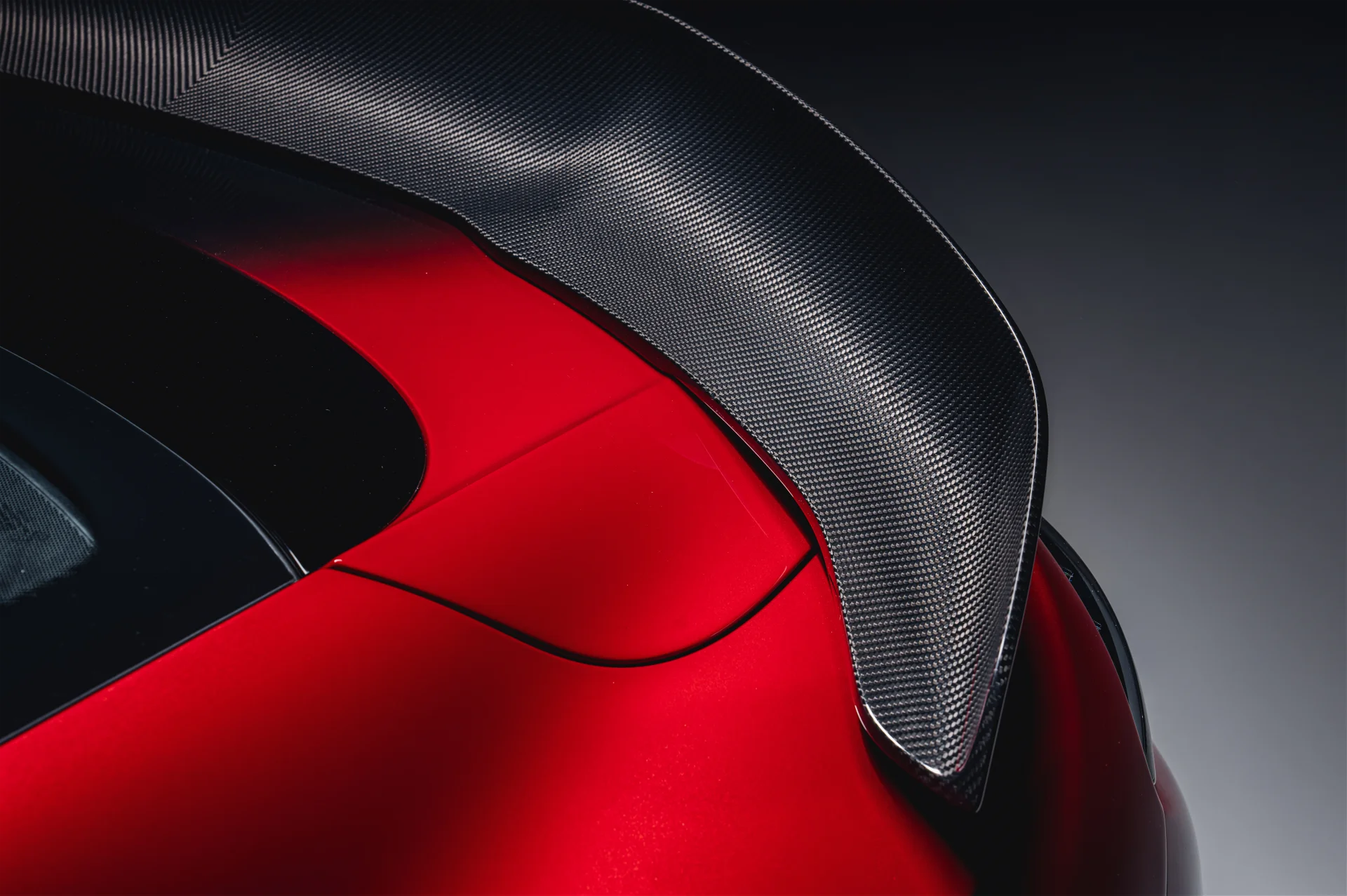
In a studio report for Car Design News, Robin Page described how the team explored alternatives to an early prototype’s appearance. A proposal by advanced-team designer Ilya Razumov helped establish the exterior direction. The resulting forms developed through collaboration with engineering, with aerodynamic requirements informing the changes.
That process matters when looking at the finished silhouette. A wing, a blade or an opening has a relationship to the air moving around the car. Its appearance carries the consequences of that work.
Where the Body Meets the Seat
Some decisions become clearest at the point of contact. A seat must support a body; the placement of its surfaces can only be understood fully when someone occupies it.
Car Design News’ conversations with the interior team describe a process moving between digital development and physical mock-ups. Leather and carbon-fibre interfaces were checked on models, and seat foam was shaped and adjusted in a trim workshop. The account offers a useful glimpse of design as revision: the screen establishes a proposal, and the physical object tests it.
The later Mulliner treatment adds a particular material and colour composition to that two-seat architecture. Bentley’s July release specifies Full Leather trim, a Supersports perforation pattern on seats and door inserts, and contrasting stitching on the dashboard and headrests.
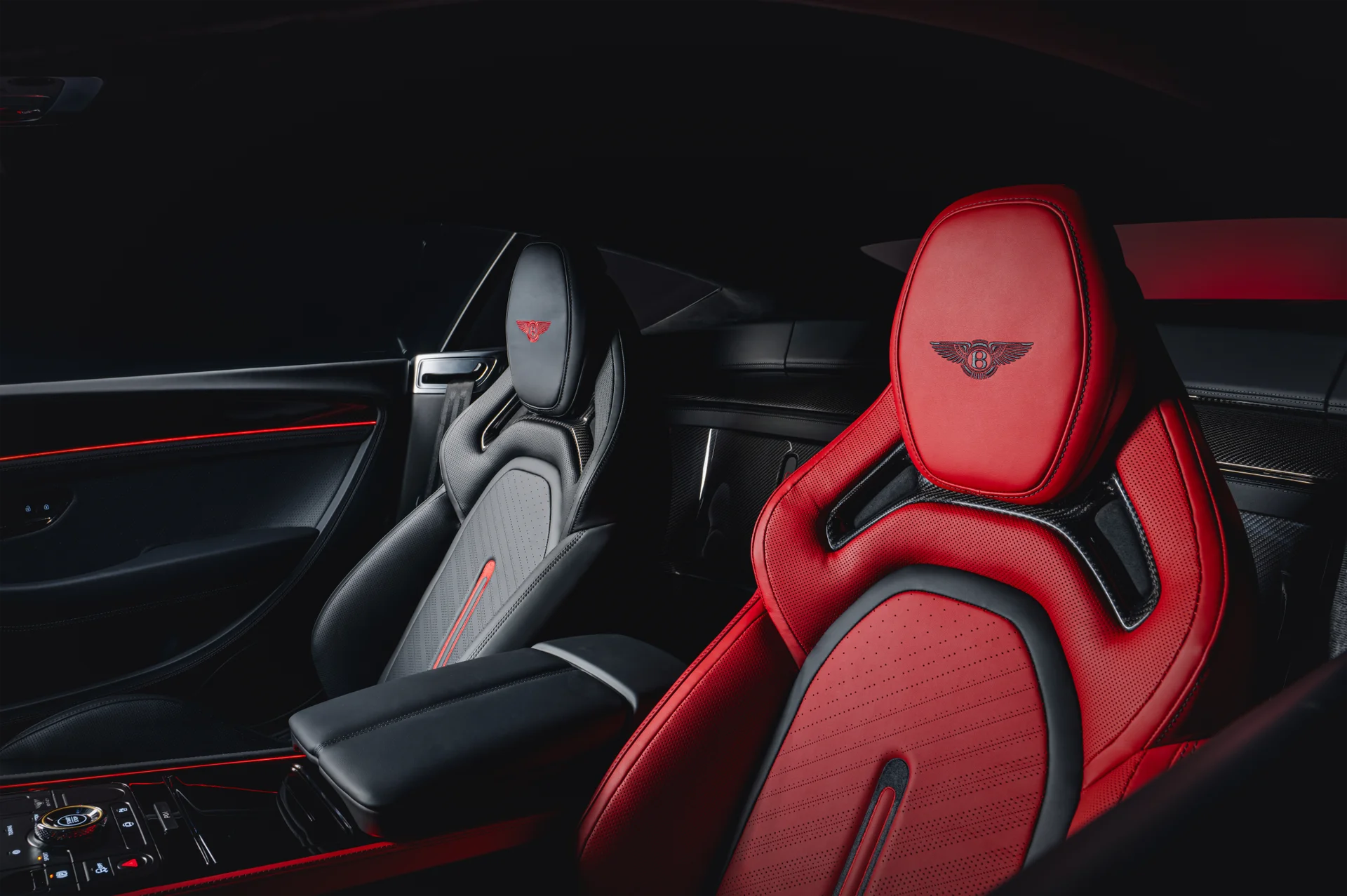
The contrasting seats make the arrangement easy to read. Their shared form belongs to one cabin, while their different colours give each position its own visual presence.
Colour Follows the Driver
Bentley describes Design Theme by Mulliner as its first exterior paint fade running from one side of a car to the other. The brighter colour defines the driver’s side and blends across the body into a darker tone on the opposite side. The arrangement follows the driver regardless of whether the car is left- or right-hand drive.
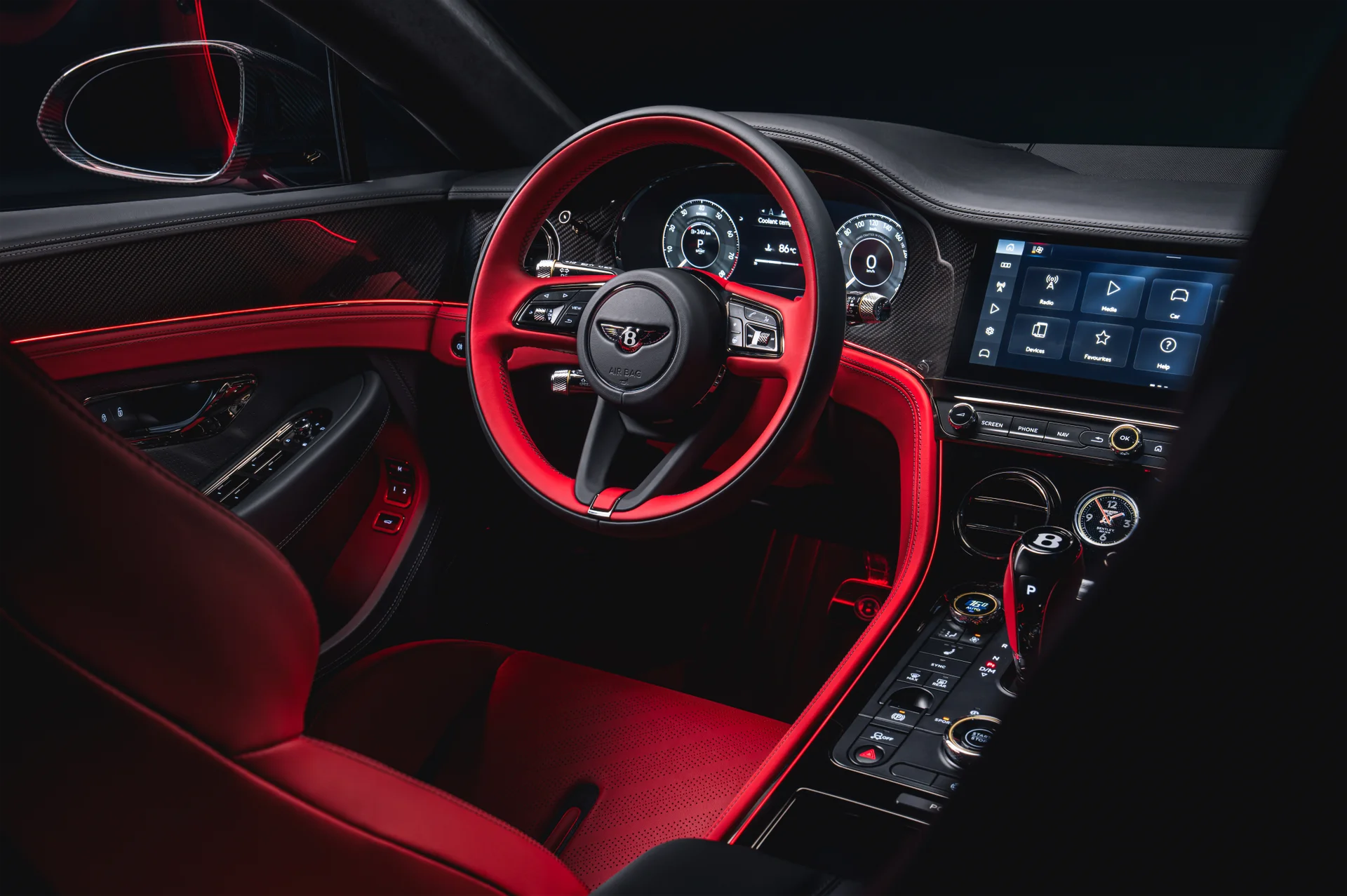
In Dragon, the exterior transition runs from Dragon Red to Black Crystal. Inside, the corresponding combination is Hotspur and Beluga. A contrasting gear lever picks up the driver’s seat colour, continuing the relationship into a smaller object within reach.
There is also an offset highlight stripe running from front to rear, aligned with the passenger seat. Alongside it, the number eight on the grille and accent pinstripes on the carbon diffusers, fender blades and sills give the exterior further points of emphasis.
These are specific choices within a wider programme. The same side-to-side idea is offered in Electric and Brodgar combinations, each with its own exterior transition and interior palette. Dragon is the version pictured here; it does not represent every Supersports interior or finish.
Reading the Finished Car
The Supersports brings together decisions made at different scales. Its drivetrain and seating layout establish the brief. Aerodynamic development shapes parts of the body. Physical trials refine the surfaces that support its occupants. Mulliner then gives the driver’s position an expression in colour that can be followed from outside to inside.
The photographs show the completed arrangement. The accounts behind them help explain how many kinds of work a finished car can contain.
Return to that first view of the Dragon specification and the colour transition becomes more than an arresting surface. It draws attention towards the place where the project’s decisions converge: the seat, the controls and the person who will put them into motion.
Sources
- Bentley Motors — Supersports: the most driver-focused Bentley ever, 14 November 2025.
- James McLachlan, Car Design News — Bentley Supersports: from gentleman’s express to tyre-smoking menace, 14 May 2026.
- Bentley Motors — Design Theme by Mulliner: Exclusively for Supersports, 1 July 2026.
Images: Bentley Motors / Bentley Media.