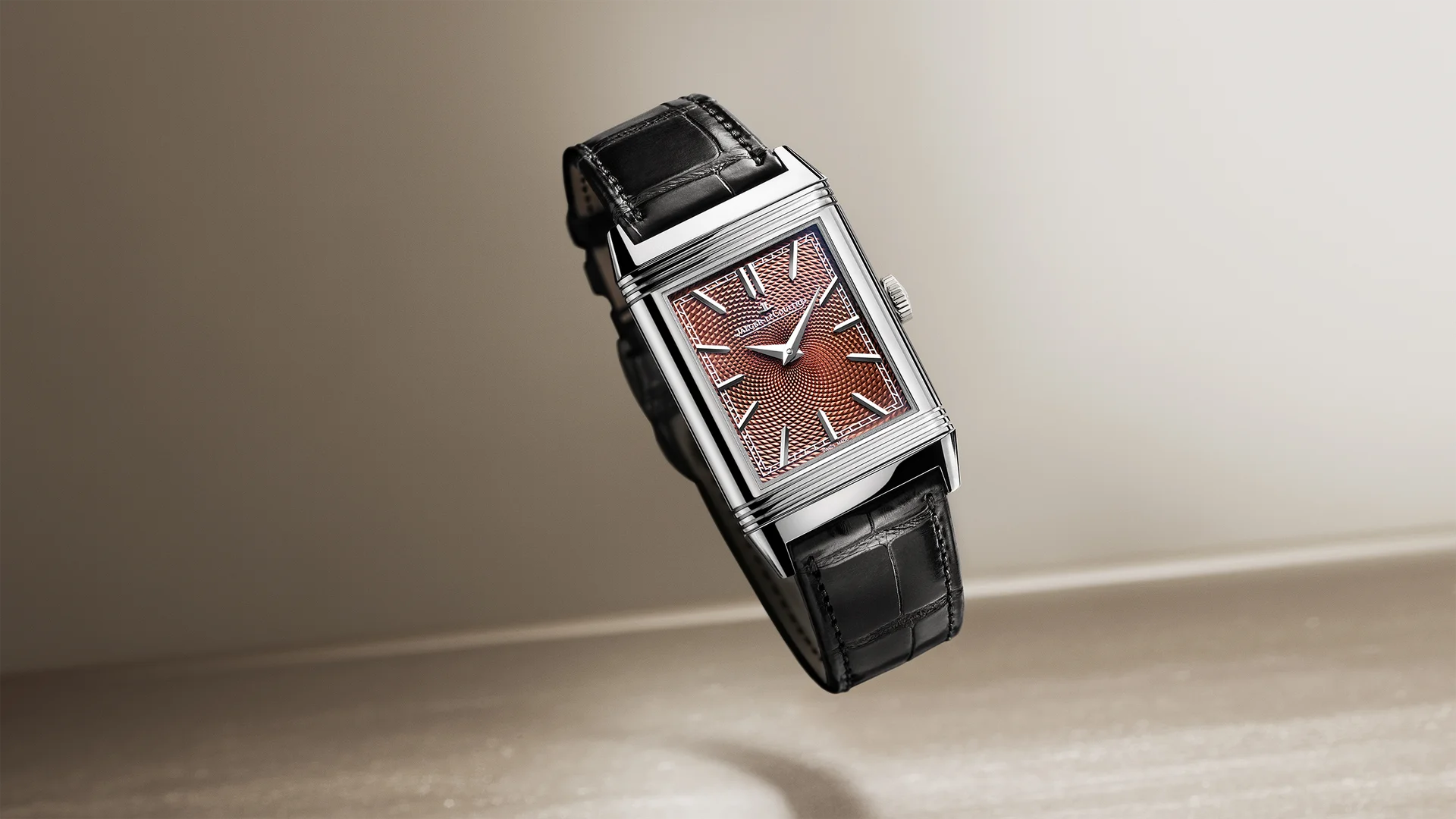
A waterfall becomes a few strokes of colour. A landscape becomes a surface small enough to turn on the wrist. In the Reverso Tribute Enamel Hokusai Waterfalls Series, the most interesting measure of time is the work required to make that change of scale convincing.
Two sides, two ways of looking
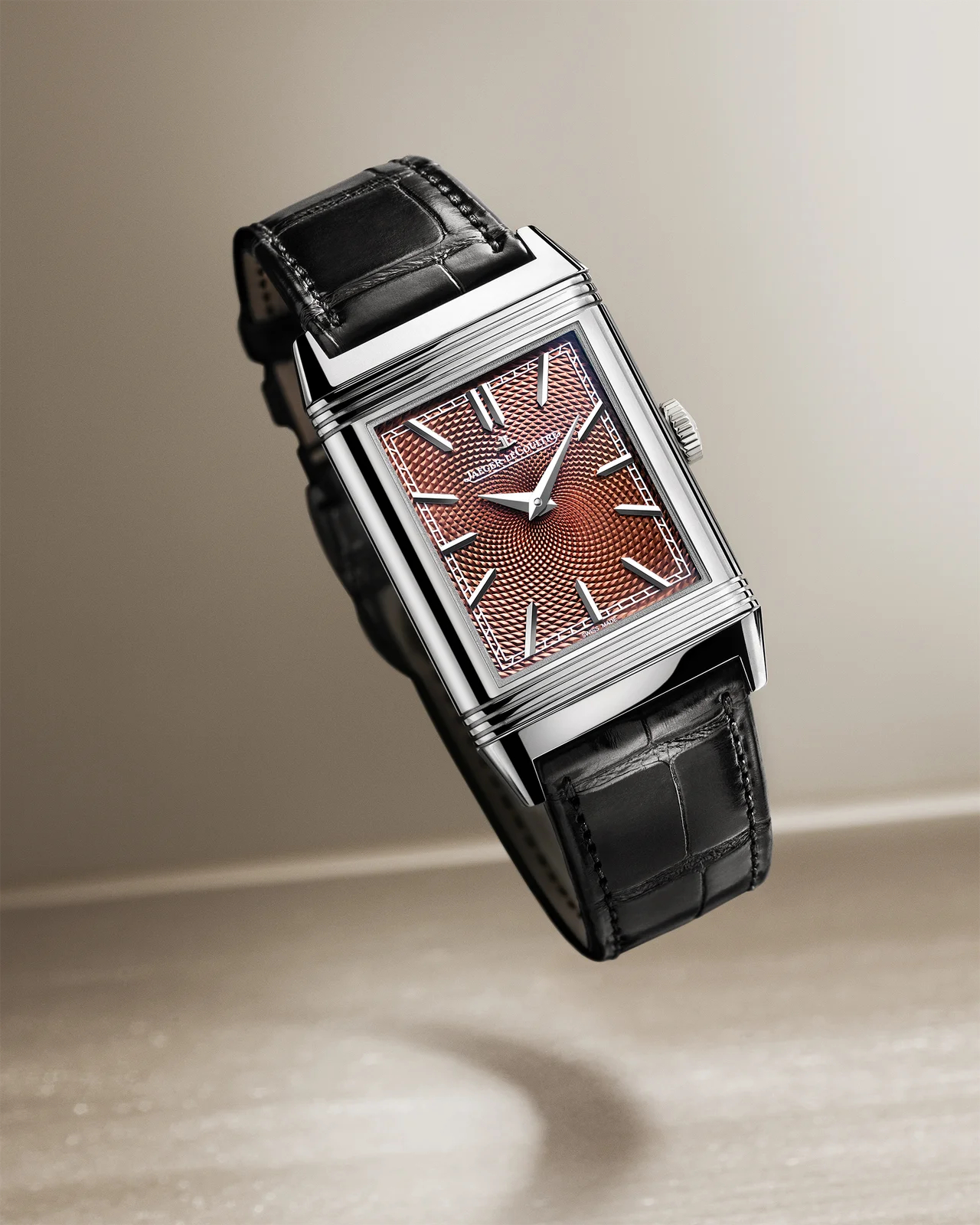
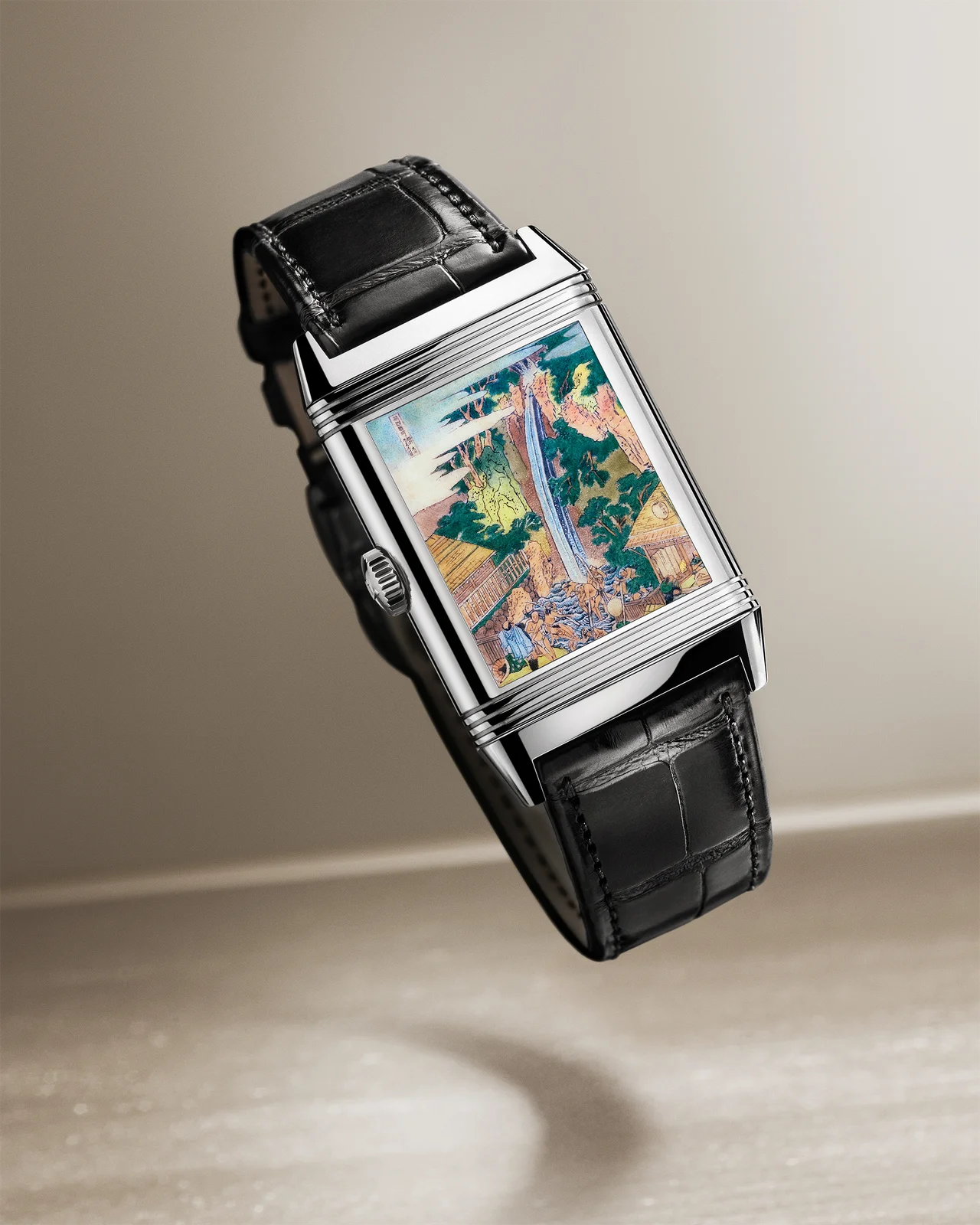
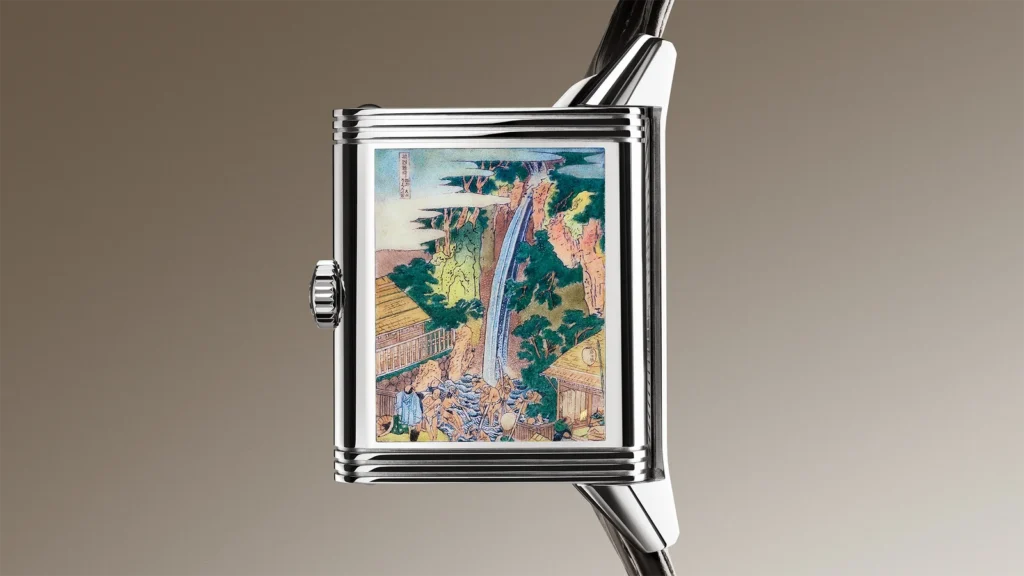
The Rōben watch offers a quiet introduction: a brown dial, silver-coloured hands and a rectangular frame. Turn the case over and the composition changes completely. Water descends through a landscape of trees, buildings and tiny figures. The front asks for a glance; the reverse invites a closer look.
That difference gives the Reverso a particular role in this story. A picture need not compete with hands and hour markers for space. It has a surface of its own, revealed by turning the case.
For 2026, Jaeger-LeCoultre brings four further Hokusai waterfall compositions to the collection, completing its adaptations of the artist’s eight-print waterfall series. The work belongs to the manufacture’s Métiers Rares™ atelier. The relationship between Japanese art and Swiss watchmaking is expressed through a practical question: how can a recognisable landscape survive a change of material, scale and purpose?
Copyright “©Jaeger-LeCoultre”. All rights reserved.
Copyright “©Jaeger-LeCoultre”. All rights reserved.
A landscape before it became a watch
Katsushika Hokusai’s A Tour of Waterfalls in Various Provinces, or Shokoku taki meguri, belongs to the early 1830s. These are colour woodblock prints, made with ink and colour on paper. The Metropolitan Museum of Art dates its Kiyotaki Kannon Waterfall at Sakanoshita on the Tōkaidō to around 1832.
The distinction between a print and a painting matters here. On the watch, an image associated with woodblock printing is interpreted through miniature enamel painting. The aim is visual correspondence across different crafts, rather than a repetition of the original production method.
Looking at the Rōben miniature, the descending water draws the eye first. The smaller details then establish its scale: roofs, branches and people gathered below. Remove too much of that surrounding information and the waterfall would lose part of its presence. The landscape depends on relationships between details as much as on any single feature.
Working at the scale of a brush tip
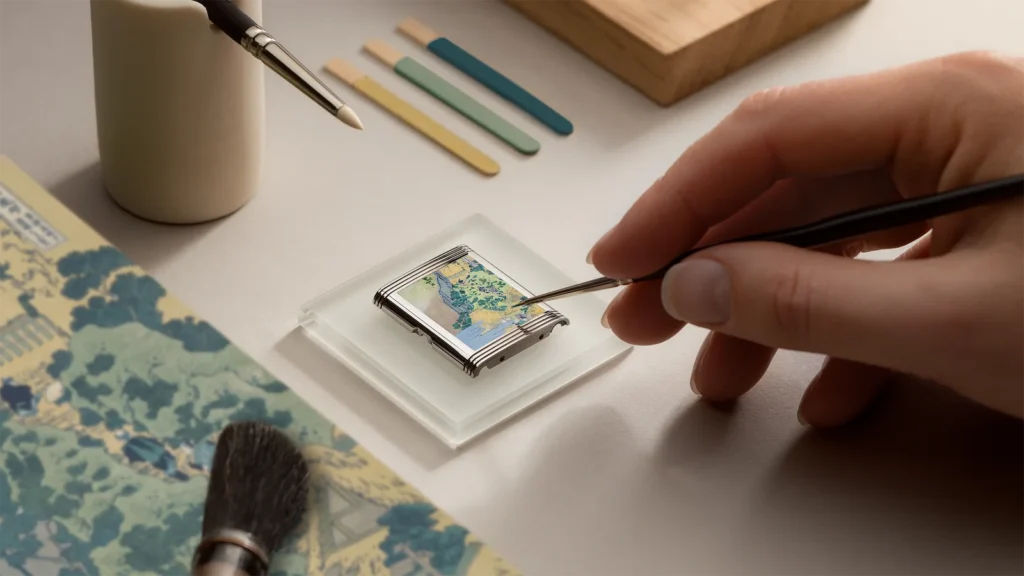
Jaeger-LeCoultre describes the miniature painting as a Geneva-technique process: at least 14 enamel layers, each fired at 800°C, with approximately 80 hours of work devoted to an image occupying about two square centimetres.
Those figures describe the conditions of the task, but the workshop photographs make its scale easier to grasp. A brush, a hand and a small rectangular component share the same frame. Under a loupe, the landscape becomes large enough to examine; outside it, the painting returns to its actual dimensions.
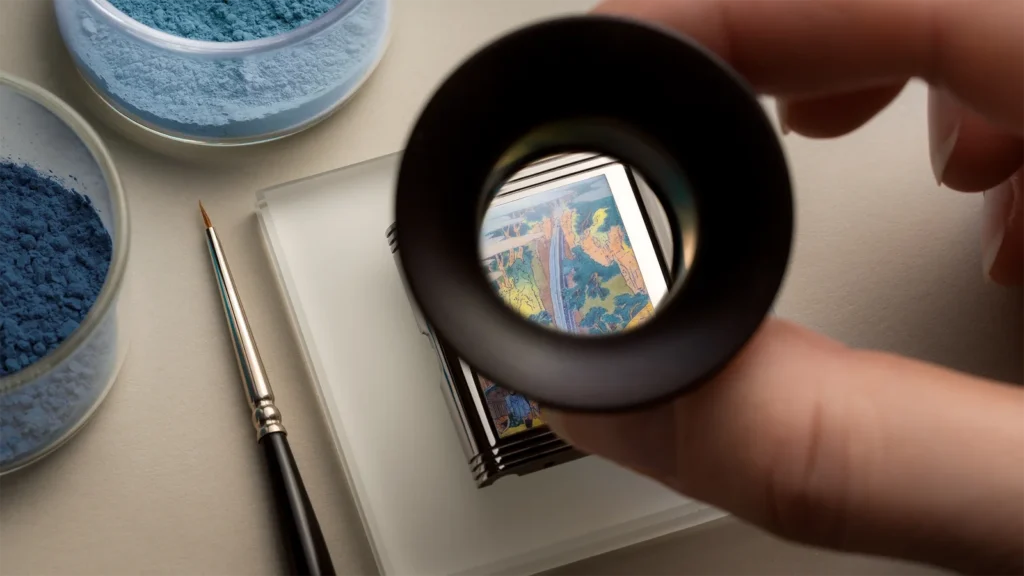
The manufacturer identifies two especially demanding details: recreating the shaded bokashi effect associated with the prints, and hand-painting the small Japanese inscriptions. Here, a passage of colour and a written character both have to remain readable within a much smaller composition.
It is tempting to judge miniature work simply by how much can fit inside a frame. A more revealing question is what remains clear. The viewer should still be able to follow the water, distinguish the landscape and understand the scene without seeing the effort that made it legible.
Geometry beneath colour
The dial tells the other half of the craft story. On the Rōben version, a barleycorn guilloché pattern sits beneath light walnut-brown enamel. Jaeger-LeCoultre specifies 49 engraved lines, each made in three passages of the rose-engine lathe: 147 passages in total.
After engraving, the dial receives four to five layers of translucent coloured enamel, with separate drying and firing stages. Faceted baton markers, Dauphine hands and a railway-style minute track complete the display.
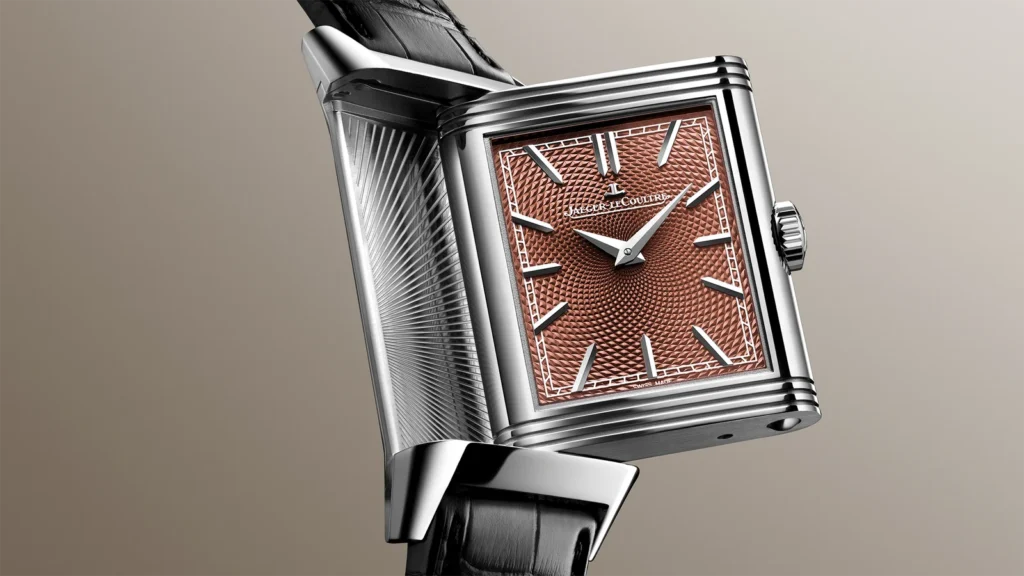
In the close-up photograph, the repeated pattern and the hands give the front a very different rhythm from the painted reverse. One surface organises light through repetition; the other organises a landscape through colour and detail. They reward different kinds of attention while sharing the same small object.
The four versions vary that relationship:
| Waterfall interpretation | Dial pattern | Enamel colour | Reference |
|---|---|---|---|
| Rōben Waterfall | Barleycorn | Light walnut-brown | Q39334T7 |
| Kiyotaki Kannon Waterfall | Wavy | Emerald green | Q39334T8 |
| Yōrō Waterfall | Bamboo-style | Olive green | Q39334T6 |
| The Falls at Aoigaoka | Herringbone | Cyan blue | Q39331T9 |
Each version is a ten-piece edition. More useful than the quantity, however, is the opportunity to compare how a different colour and engraved structure change the character of the dial.
A mechanical foundation
Inside is the manually wound Jaeger-LeCoultre Calibre 822, a rectangular movement displaying hours and minutes. Its published power reserve is 42 hours; its frequency is 3 Hz. The movement is 2.94 mm thick.
The painted reverse is a closed surface. It is the artwork, rather than the movement, that the wearer discovers when turning the case. The mechanism continues its task within, supporting the object’s everyday purpose while the two external faces offer different experiences.
The work that remains visible
There are several kinds of time in these watches: the hours indicated by the hands, the historical distance from Hokusai’s prints, and the time spent translating an image into another material.
The last of these is perhaps the easiest to overlook. In a finished miniature, a steady contour or a gradual colour transition can seem inevitable. The workshop photographs restore a sense of the decisions behind them. Someone has to judge the placement of a mark, the balance of a colour and the point at which a detail reads clearly enough.
For Nacré Strata, that is where the value of the series becomes most interesting. The finished watch provides a reason to look closely; the work behind it gives that attention somewhere to go.
Further reading: Explore how independent watchmaker Andreas Strehler makes mechanical precision readable in our feature on the Lune Exacte.
Technical details at a glance
Manufacturer-published specifications.
| Detail | Reverso Tribute Enamel Hokusai Waterfalls Series |
|---|---|
| Case material | 18K white gold, 750/1000 |
| Case length × width | 45.6 × 27.4 mm |
| Movement | Manually wound Jaeger-LeCoultre Calibre 822 |
| Functions | Hours and minutes |
| Power reserve / frequency | 42 hours / 3 Hz |
| Water resistance | 3 bar (30 m) |
| Reverse | Miniature-painted grand feu enamel on the closed reverse side |
| Strap or bracelet | Interchangeable black alligator leather with white-gold folding clasp, or 18K white-gold Milanese bracelet |
| Editions | Four versions, ten pieces per reference |
Sources and images
This feature draws on Jaeger-LeCoultre’s published documentation and official press photographs, with museum collection records providing context for Hokusai’s prints. Craft timings and technical specifications are manufacturer-reported. Nacré Strata has not handled the watches or observed their manufacture in person.
- Jaeger-LeCoultre — Introducing Reverso Tribute Enamel Hokusai Waterfalls Series
- Jaeger-LeCoultre — Watches and Wonders 2026: collection overview
- Jaeger-LeCoultre — Reverso Tribute Enamel Hokusai Yōrō Waterfall: specifications and craftsmanship
- The Metropolitan Museum of Art — Kiyotaki Kannon Waterfall at Sakanoshita on the Tōkaidō
Official press photography supplied through the Jaeger-LeCoultre Media Centre. Individual image credits appear beside the photographs.